GoDaddy
Uncovering Cross-Product Opportunities and Aligning Product Teams
Role & Team
Timeframe
Tools
Figma, FigJam, Jira, Confluence, Loom, Trello, Google AdSense, FullStory, UserTesting
Company
Responsibility
Impact
Q3 2023
Served as the Foundation for the Company Northstar
3 product teams
Aligned on standardization initiative
100+
Designers, devs, PMs reached via internal design newsletters & documentation
Imagine a subway with a lot of connections…
Analogy of the Key Problem
Think about this Scenario…
This is Harry Potter’s first time going to school, and Harry needs to find his way to Platform 9¾. However, he does not know the exact directions. Think about the feelings he might have: probably frustrated or confused?


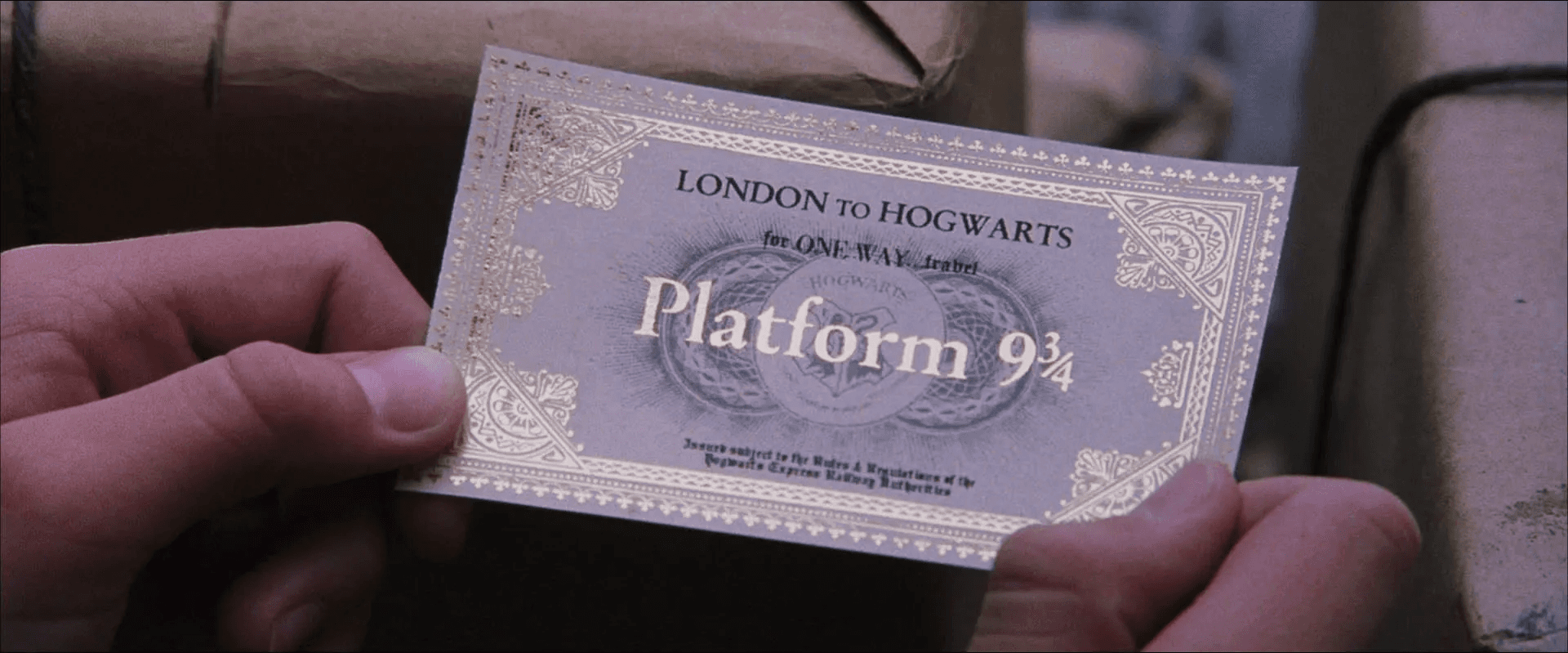
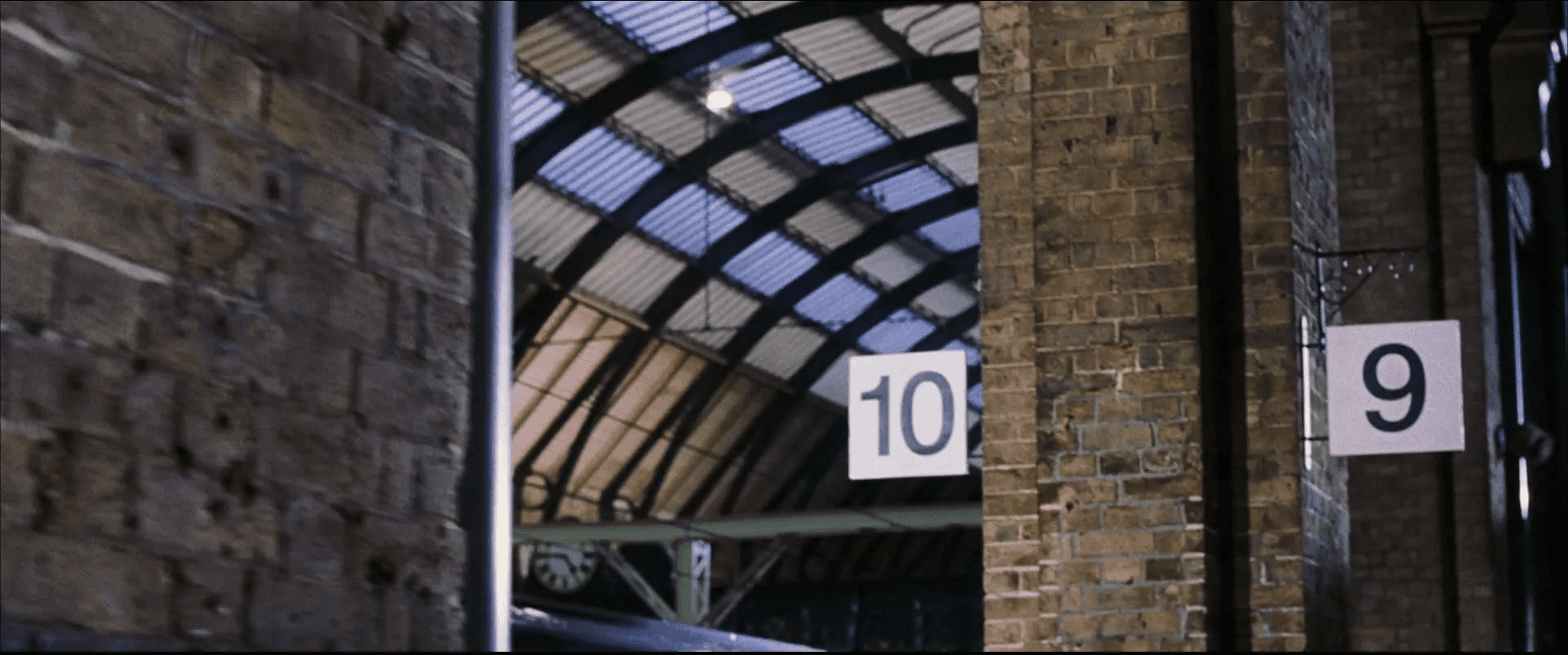
You might never need to go through Platform 9¾ like Harry, but you probably have been on poorly connected subways at some point. And if so, you might remember going through some extra routes, doing 2 or 3 transfers, and trying to figure out the pricing direction of the train, before tracing your route or even reaching your destination.
How it Connects to GoDaddy
GoDaddy encounters similar problems, underserving a significant portion of its 20 million+ users…
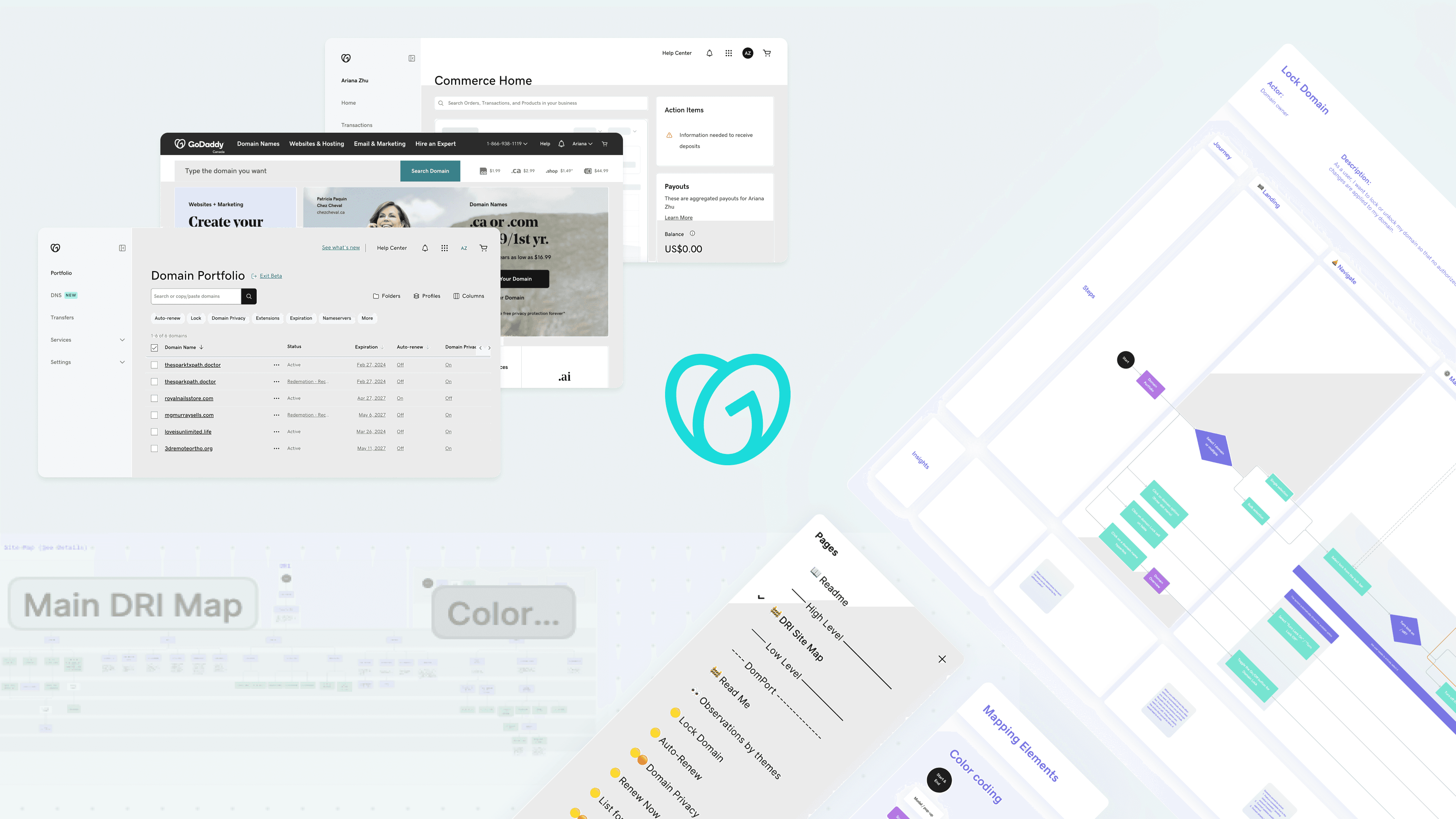
As the world's largest domain registrar, GoDaddy owns multiple product surfaces relevant to domains. However, there were a lot of inconsistencies across surfaces, making it difficult for users to navigate and find essential features. This can lead to user churning and turning to other platforms for similar services.
Business Goal
Prevent User Confusion & Churning
We want to drive domains experience consistency across surfaces, so that the users are less likely to feel frustrated or confused as they navigate through our products. Standardizing the domains experience is an opportunity for GoDaddy to boost customer retention and satisfaction, thus increasing revenue.
This standardization effort also helps all teams become more efficient: Product teams get clear patterns to follow, Support handles fewer confused-user tickets, Sales has an easier product to sell, Design works from unified standards, and Engineering maintains a more consistent codebase. The end result is less time spent dealing with inconsistency-related issues and more time on actual innovation and improvements.
Working in Agile can cause some problems…
The Real Problems
Limited Product Understanding & No Clear Ownership
In today's "test more and fail fast" product development culture, many design details were embedded in the code without clear documentation, making it hard for team members to grasp the overall user experience.
With numerous teams and products, a lack of clear ownership also creates a cascade of inefficiencies: Teams end up in endless discussion cycles without decisive direction, leading to diluted communication and stalled progress.
These may lead to…
Fragmented Approach Disconnected from User Outcomes or Strategic Direction
Without a clear product vision or dedicated ownership, different groups make independent decisions that may conflict or overlap, wasting both time and resources.
Most critically, this fragmented approach often results in building features that don't actually solve real user needs, since no single owner is deeply connected to and advocating for the customer perspective. Teams essentially build in a vacuum, disconnected from clear user outcomes or strategic direction.
How might we drive the domains experience consistency across different product surfaces at GoDaddy?
Approach Taken
Product Testing & Mapping User Journeys
I thoroughly tested the products, considering various scenarios to understand potential user challenges. Meanwhile, I communicated with all the members on my team to further understand our users and products.
I also created detailed maps of how users interacted with different products, highlighting areas where they might encounter difficulties.
Pinpointing the Inconsistencies
#1 In Need of More Segmented Domain Management
Users Struggle to Manage their Domains Efficiently.
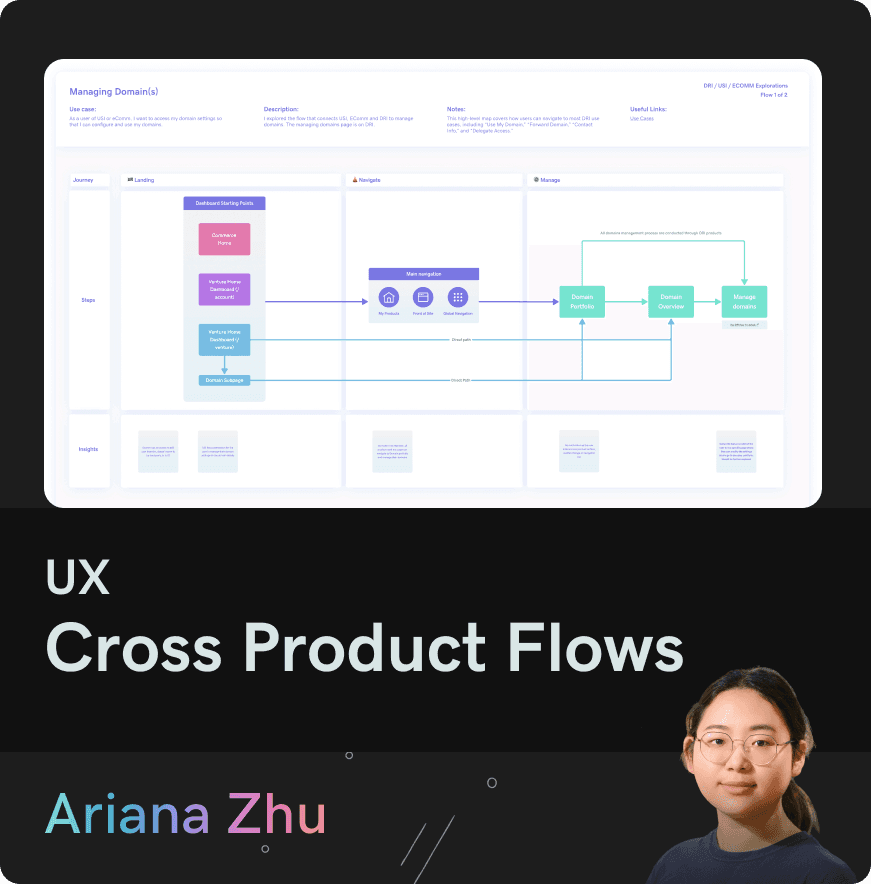
Below is a high-level map of how users can manage their domains. There is no direct path from Commerce Home and Venture Home Dashboard to Domain Portfolio or Domain Overview (takes at least 4 clicks to navigate), causing user confusion and frustration.
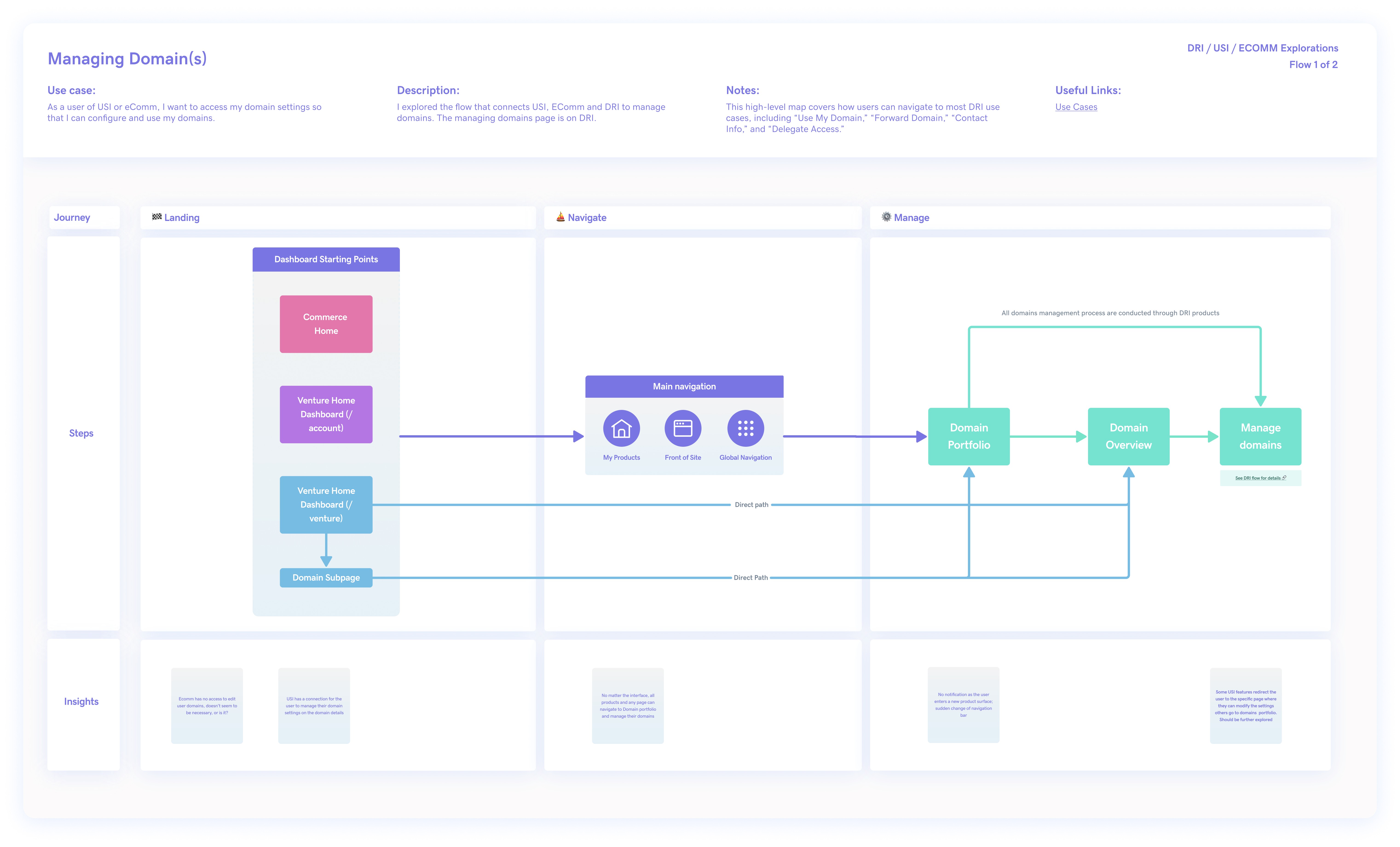
How might we give users a streamlined path to easily manage their domains?
Add segmented domain management features on Venture Home Dashboard and Commerce Home, allowing users to navigate to domain management with one click.
#2 In Need of Smoother Transitions
Switching Between Different Services was Often Confusing.
An example of where we can improve: on these 6 key screens, the global navigation bars appear differently in different locations of the screen, causing confusion.

How might we give users more confidence navigating through our products?
Standardizing our general navigation bars to create a more consistent experience
Informing the user as they transition from one platform to another to minimize confusion
Adding the platform name to the left bar consistently across products
#3 In Need of More Guidance
Users Needed More Help to Navigate Complex Features.
Directional tactile paving in subways can provide a sense of direction for people who are visually impaired and those who are otherwise distracted. To build a sense of easy navigation in the complex architecture, we want to provide the "directile tactile paving" for our users with different expertise.

How might we give the user a sense of easy navigation in a complex architecture?
Reviewing earlier cross-product research on the subject to build on prior knowledge
Monitoring user recordings and quantitative user drop on the funnel to determine priorities
Conducting more experimentation to try different combination of cross-product connections
Promoting Alignment Across Product Teams
Team-Specific Workshops
Starting with One Product Team, At a Time
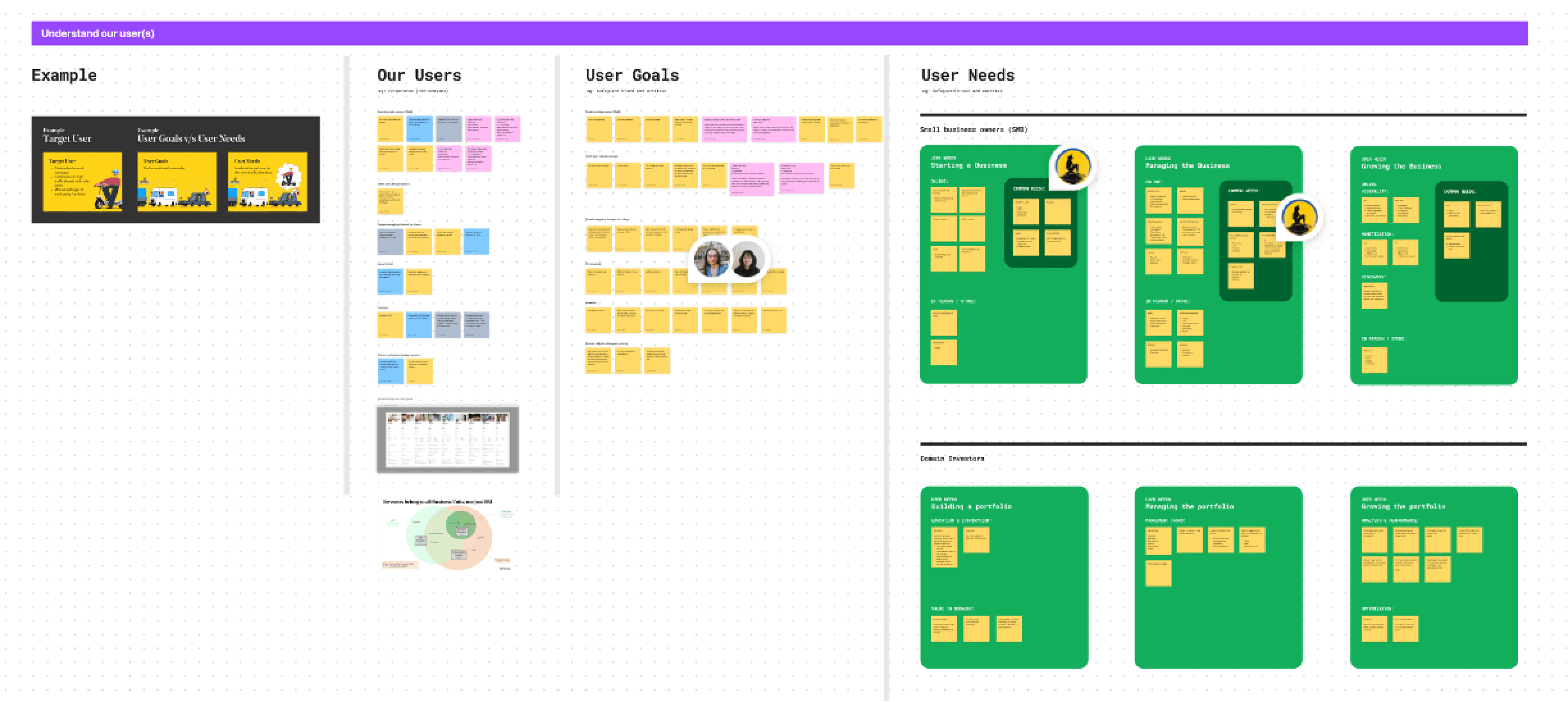
I documented my questions and comments about the product surfaces, and mapped the insights into different themes and translated them into actions.
Then I met with fellow designers, product managers, and engineers at that team to propose the design recommendations and gauge their feasibility.

Workshops with 3 Teams
Then Expanding to More Product Teams
Building on earlier effort, I also conducted a workshop with 3 product design teams to align our vision on understanding the navigational complexities across surfaces, while brainstorming opportunities to tackle the inconsistencies.
Through the workshop, I also call for teams to continue working on understanding and documenting the overlapping areas across product surfaces. As we identify opportunities, we also hope to involve different teams together to align our vision, propose action items, and implement an iterative collaboration cycle.
Accessible and Scalable Documentations
Leaving Long-Term Impact through Documentation
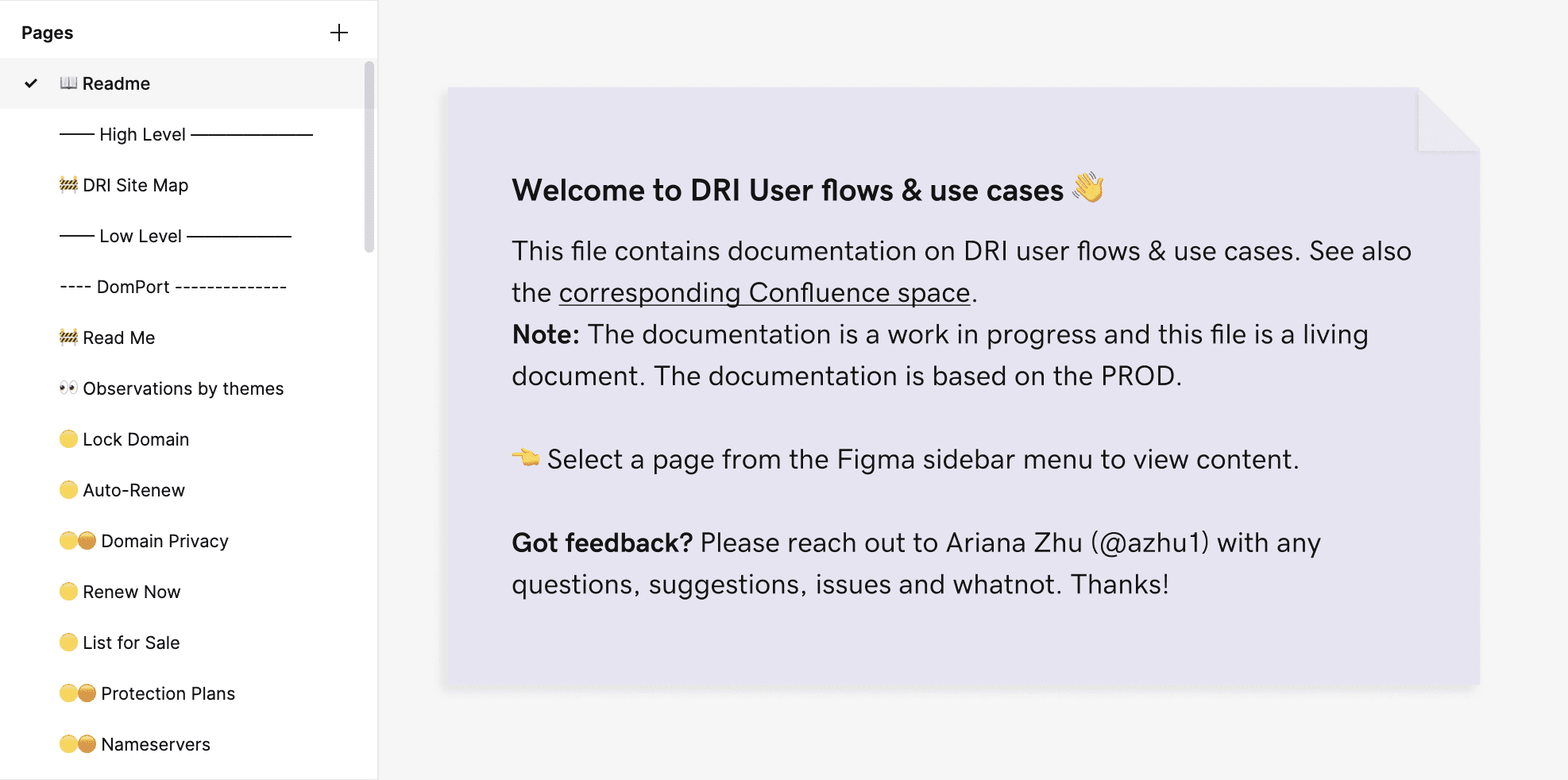
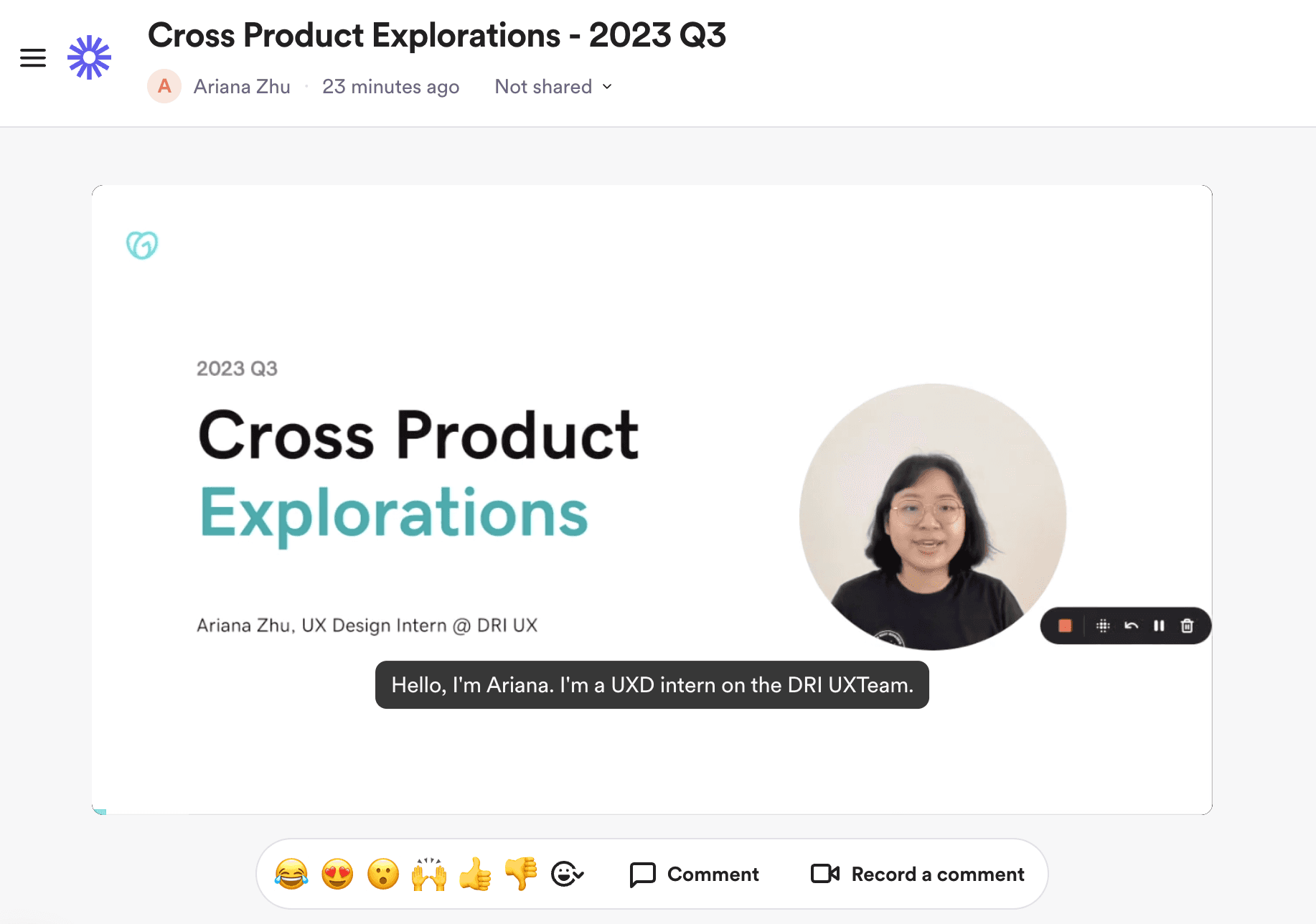
I documented my cross product exploration effort on Figma, Confluence, and Loom. Throughout the process, I made sure to double check with designers (my documentation users) to see if my storytelling/my way of presenting the information is clear. I ended up creating artifacts with varying levels of detail to cater to different users.
Success
Removing Confusion about Navigation Complexities
I presented my work with the team and the Design VP. My work was also featured in the internal team newsletter and shared with all the designers at GoDaddy.
My work removed confusion about the navigation complexities for domain products, and identified opportunities for designers and developers. It was the precursor of the 2023 Q3 Northstar company initiative.

Rahul Rahate
Director of UX, GoDaddy
“From day one, Ariana immersed herself in her assignment objectives and quickly grasped the intricacies of the different products in the teams space. She exhibited a strong work ethic, consistently delivering high-quality designs and going above and beyond. Her ability to learn quickly and adapt to new challenges was truly impressive.
She seamlessly integrated with our team, actively participating in the team process. Her proactive approach not only facilitated seamless collaboration but also showcased her commitment to continuous improvement and growth.
I have no doubt that Ariana will excel in her future endeavors, and I wholeheartedly recommend her to any organization seeking a talented and driven individual.”

Fernanda Martinez
Senior Product Designer, GoDaddy
“Ariana is a quick learner and a problem solver, from the beginning of her internship went full hands on committed to the project and the team goals. With minimal direction, she was able to take on complex tasks. She did exceptionally well in getting to the root of the problem and presented actionable insights. I can only wait to see all the amazing things she'll build in the future.”
Final Shoutout
A Fulfilling Internship
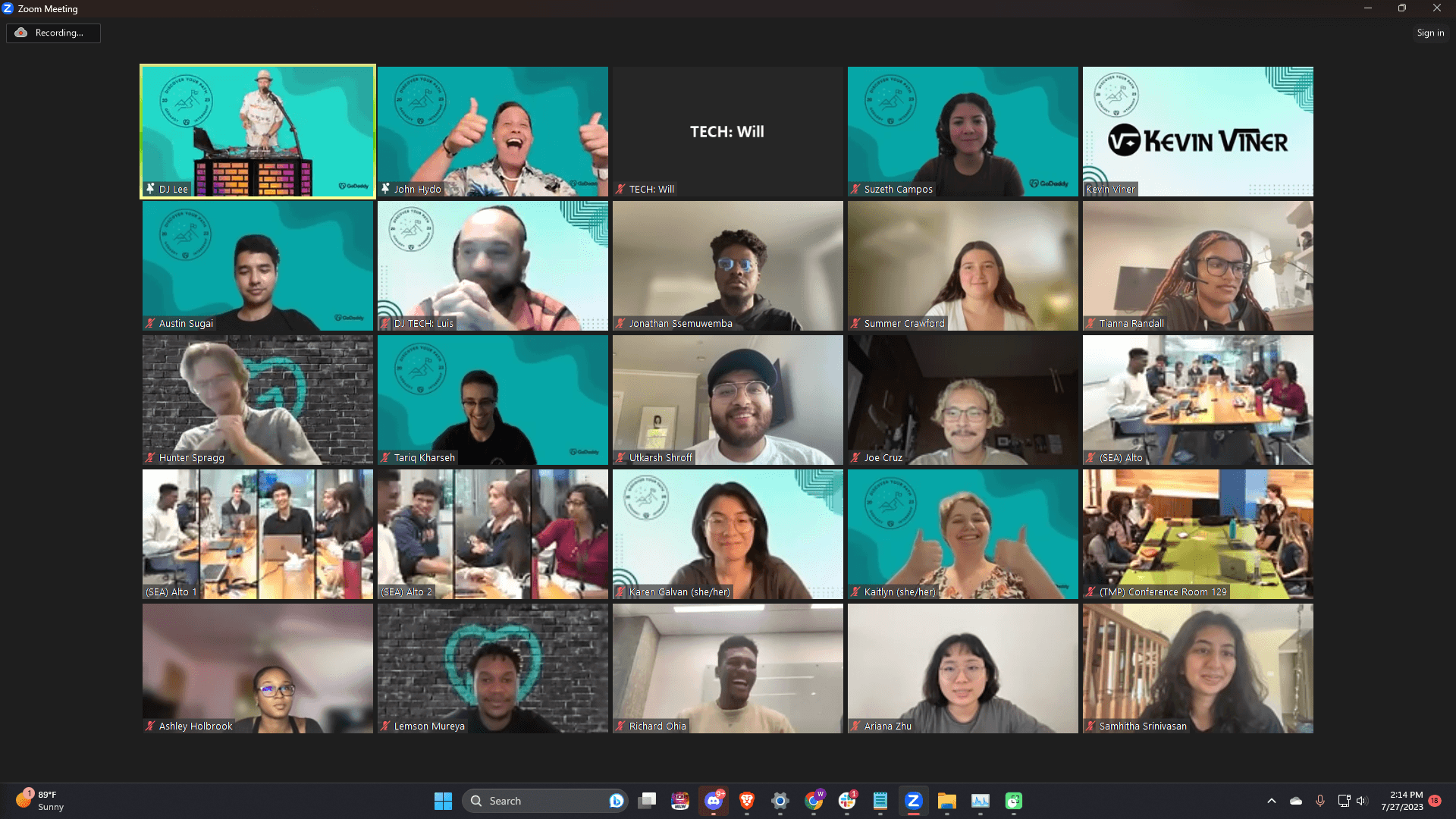
Beyond this project, I also worked on growth experiments, attended the intern events, participated in a 1-day hackathon, and made new friends!
I'm grateful to receive the guidance from my manager, mentors, and coworkers throughout my internship!
What Else Did I Do?
Immersing Myself in the Agile Setting
Actively participated in weekly standups, retros, and plannings in the Agile environment
Facilitated a feedback meeting for internal design critiques
Tracked progress and workload via Jira
Supporting Other Designers' Work
Examined experimentation data and conducted A/B testing for ad monetization.
Supported a Lead UX Designer in their documentation of design components.
Worked on the empty states feature and participated in the end-to-end design process.
Retrospectives
Next Steps
I would do rapid prototyping to explore the final solution, so that I can help the team align on a deeper understanding of the effort needed to eliminate the inconsistencies and bring clarity about the desired outcome.
Key Takeaways
Documentation is a product
I treated documentation like a product design challenge—understanding my users (designers, PMs, engineers), their needs, and creating artifacts at the right level of detail for each audience.
Collaboration requires translation
Different disciplines speak different languages. I learned to present the same findings through multiple lenses: user impact for designers, feasibility for engineers, business value for PMs.
Systems thinking scales impact
Rather than fixing individual screens, I mapped the entire ecosystem. This "zoom out" approach revealed patterns and opportunities invisible to teams focused on their specific surfaces.
If you would like to learn more, please contact Ariana for more information.
arianazhu.design@gmail.com
Copied
Check out more of my projects:

Get in touch with me at
arianazhu.design@gmail.com
Copied
Designed and built by Ariana Zhu © 2025